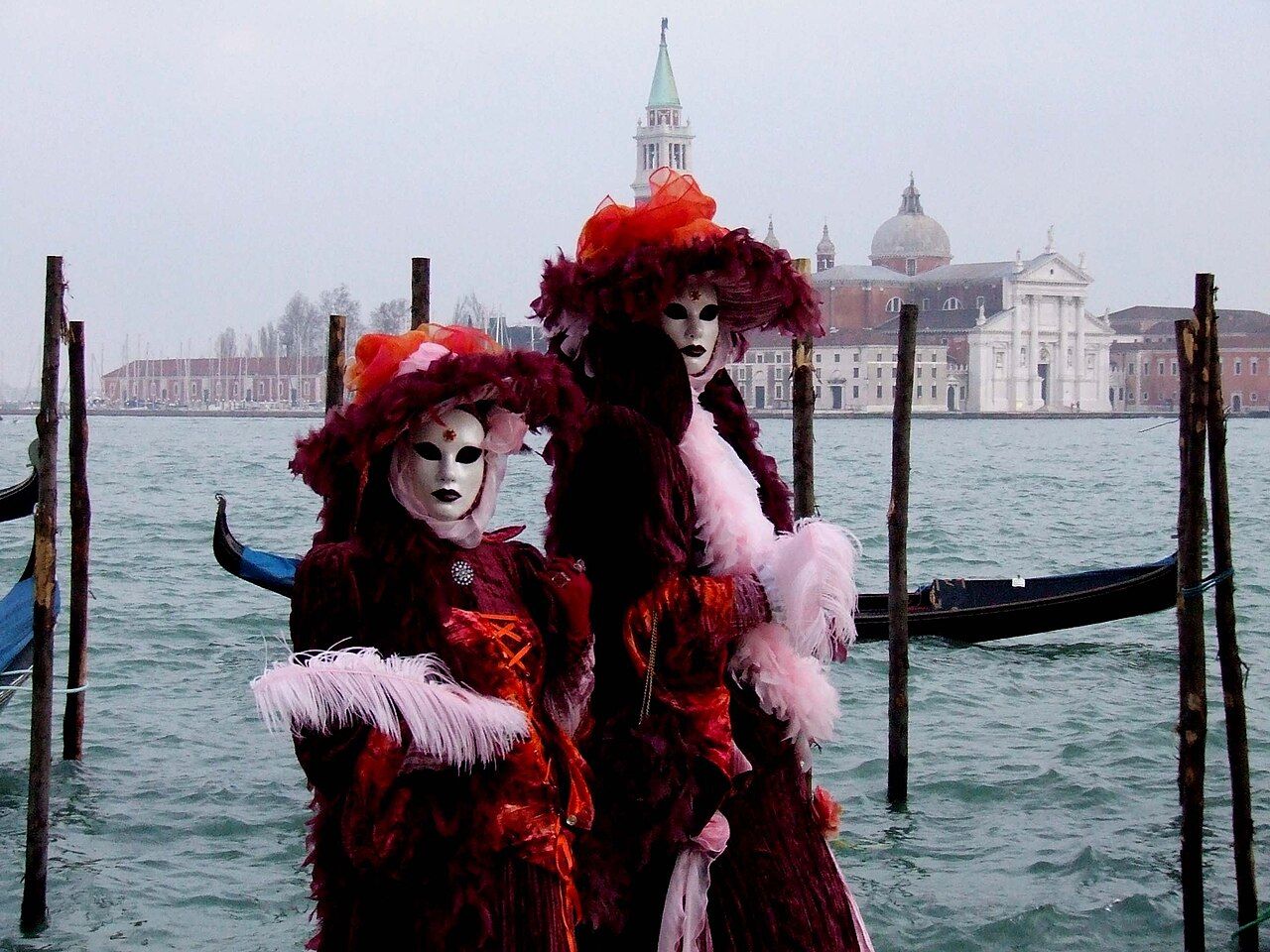
The Venice Carnival 2027 ends on Tuesday 9 February (Shrove Tuesday). The most important days are the last six, from Thursday 4 February (Giovedì Grasso) to Tuesday 9, with the peak on the weekend of 6–7 February. The first events are held on the last weekends of January.
The street carnival is free: you only pay for balls, shows and guided events. This guide covers dates, what to see, what it costs and how to move around a very crowded city.
Venice Carnival 2027 dates
| Day | Date | What happens |
|---|---|---|
| Opening weekends | Late January | First parades on water and in the districts |
| Giovedì Grasso | Thursday 4 February | Start of the main week |
| Final weekend | 6–7 February | Costume parades, biggest crowds |
| Shrove Tuesday | Tuesday 9 February | Closing day and award ceremonies |
| Ash Wednesday | Wednesday 10 February | Carnival is over |
What to see
- Costumes in St Mark's Square: the masked figures pose for photographers between the square, the Piazzetta and the waterfront. The best light and the fewest people are between 7 and 9 am.
- The costume contest: a stage in St Mark's Square hosts daily parades and the final for the best mask.
- The water parade: decorated rowing boats on the Cannaregio canal on the opening weekend, with food stalls on the banks.
- Festa delle Marie: a historical procession of twelve young Venetian women in Renaissance dress.
- Carnival in the districts: music and children's events in Cannaregio, Castello and on the islands. Burano is colourful and much quieter.
The Flight of the Angel from the bell tower of St Mark's has not been held in recent editions: check the programme to see whether it returns in 2027.
Masks and costumes
The traditional masks are the bauta (white, with a square jaw, worn with a black cloak and tricorn hat), the colombina (half mask), the medico della peste (plague doctor, with the long beak) and the moretta (black oval). A handmade papier-mâché mask from a Venetian workshop costs €30–150. The masks sold on street stalls for €5–10 are imported plastic.
You do not need a costume to take part. If you want one, rental ateliers charge about €150–500 a day, with hair and make-up as extras. Book weeks ahead for the final weekend.
Balls and paid events
Private balls in the palaces on the Grand Canal are the expensive side of Carnival: tickets go from about €300 for a dinner with show to several thousand for the most famous balls. Costume is compulsory. Cheaper options are the concerts in churches and scuole, and afternoon chocolate with music in the historic cafés.
What to eat
- Frittelle (fritole): fried dough balls with raisins, or filled with custard or zabaione
- Galani (crostoli): thin fried pastry strips with icing sugar
- Castagnole: small fried balls, plain or filled
Pastry shops sell them only in the Carnival weeks.
Costs and where to stay
Hotel prices in Venice double or triple on the final weekend and from Giovedì Grasso to Shrove Tuesday. To spend less, come on the weekdays of the first week, or sleep in Mestre: trains reach Venezia Santa Lucia in about 10 minutes and run until late. In the historic centre, Cannaregio and Castello are quieter and cheaper than San Marco.
The day-visitor access fee has so far applied on selected dates in spring and summer, not during Carnival. Check the city's official site before you travel.
How to avoid the crowds
- Arrive by train. Parking at Piazzale Roma and Tronchetto fills early.
- On the final weekend the route from the station to Rialto and St Mark's can become one-way on foot at peak hours. Walk through Cannaregio or Dorsoduro instead.
- See St Mark's early in the morning, then move to the districts and the islands from 11 am to 4 pm.
- A vaporetto day pass costs about €25. Boats on the Grand Canal are packed: walking is often faster.
- Book restaurants for dinner. Many do two sittings.
Weather
Early February is cold and humid: 1–9°C, often with fog. High water is possible but the MOSE barriers now protect the city on most occasions. A costume is not warm: wear thermal layers underneath.
Other carnivals in Italy in 2027
- Viareggio (Tuscany): parades of giant papier-mâché floats on 30 January and 4, 7, 9, 14 and 20 February.
- Ivrea (Piedmont): the Battle of the Oranges, 7–9 February.
- Cento (Emilia-Romagna): parades on Sundays from 31 January to 28 February.
- Putignano (Puglia) and Acireale (Sicily): the main carnivals of the south.
- Milan: the Ambrosian carnival lasts four days longer, until Saturday 13 February.
For the rest of your stay, read our Venice travel tips and where to go in Italy in February.